CAR-T Officially Enters the Gastric Cancer Treatment Pathway
The 2026 edition of the CSCO Gastric Cancer Guidelines marked a major milestone for cell therapy by officially incorporating CAR-T treatment into the management pathway for advanced gastric cancer.
Among the highlighted therapies was satri-cel (CT041), a CLDN18.2-targeted CAR-T product, which was included as a guideline annotation within the third-line treatment section for patients who failed standard therapies.
This is widely regarded as the world’s first gastric cancer CAR-T therapy to receive recognition within an authoritative clinical guideline.
Beyond the inclusion itself, guideline recognition carries broader implications: it signals that the therapy has demonstrated sufficient clinical value, safety, and efficacy to enter real-world treatment discussions among oncologists.
For the field of solid tumor CAR-T — historically challenged by limited efficacy and complex tumor biology — this represents a landmark step forward.

Photo by National Cancer Institute on Unsplash
Why CLDN18.2 Matters in Gastric Cancer
Developing CAR-T therapies for solid tumors has long been difficult due to several biological barriers, including:
· Antigen heterogeneity
· Limited T-cell infiltration into tumors
· Immunosuppressive tumor microenvironment
· Narrow therapeutic safety windows
CLDN18.2 has emerged as one of the most promising targets in gastric cancer because of its relatively restricted expression in normal tissues and its frequent overexpression in gastric and gastroesophageal cancers.
As a result, CLDN18.2 has become a major focus across multiple therapeutic modalities, including:
· Monoclonal antibodies
· Bispecific antibodies
· ADCs
· CAR-T therapies
The inclusion of CT041 in the CSCO Guidelines further validates the clinical relevance of this target.
Positive Signals from the CT041-ST-01 Study
According to the key data referenced in the CSCO Guidelines, the CT041-ST-01 study enrolled patients with advanced gastric cancer who had failed standard therapies and showed CLDN18.2 IHC 2–3+ expression in at least 40% of tumor cells.
Key findings included:
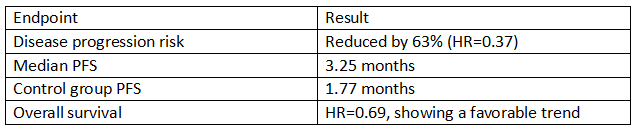
In the context of late-line gastric cancer treatment, these outcomes are clinically meaningful.
More importantly, CAR-T therapies have historically achieved their greatest success in hematologic malignancies. Gastric cancer, by contrast, is a highly challenging solid tumor indication.
The guideline inclusion of CT041 therefore suggests that CAR-T therapy is beginning to establish a legitimate role in solid tumor oncology.
“CAR-T-Like” Combination Strategies Are Also Gaining Attention
In addition to CT041, the 2026 CSCO Guidelines also referenced a first-line “CAR-T-like” triplet therapy regimen that achieved an objective response rate (ORR) of 76%.
While not a conventional CAR-T product, the strong response rate highlights the broader momentum of cellular and immune-based therapies in gastric cancer.
For years, advanced gastric cancer treatment relied primarily on chemotherapy, targeted therapies, and PD-1 inhibitors, with relatively limited survival improvements.
The emergence of cell therapy approaches may now begin shifting the field from modest survival extension toward deeper and potentially more durable responses.

Photo by Hans Reniers on Unsplash
A Milestone for China-Originated CAR-T Innovation
This development is also significant from an industry perspective.
Over the past decade, China’s CAR-T ecosystem has rapidly evolved through:
· Early-stage technology adoption
· Rapid expansion in hematologic oncology
· Establishment of GMP and CMC capabilities
· IND and global clinical development progress
· Continued advancement into solid tumors
The inclusion of CT041 in the CSCO Guidelines represents one of the clearest signals yet that China-originated solid tumor CAR-T innovation is entering mainstream clinical pathways.
From laboratory research to clinical validation and finally guideline recognition, this journey has taken nearly ten years.
And for solid tumor CAR-T therapy, this may only be the beginning.
 86 13381666596
  info@hillgene.com
 English