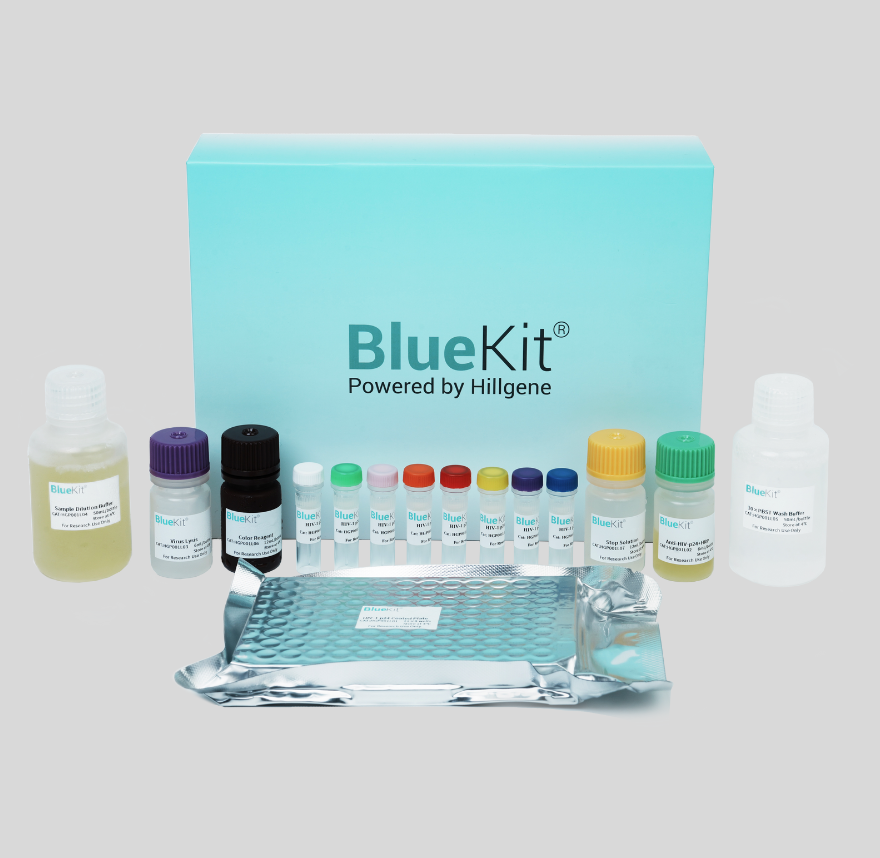
This kit utilizes RT-PCR with specifically designed target sites for the detection of residual K562 feeder cells. K562 cells engineered via gene editing are widely studied and utilized for their excellent proliferative properties. Research has shown that using gene-edited K562 cells as feeder cells can enhance NK cell expansion efficiency by tens to tens of thousands of times. Although K562 cells are irradiated and easily eliminated by NK cells, it is essential to ensure that residual feeder cells are minimized in the final product to ensure patient safety.
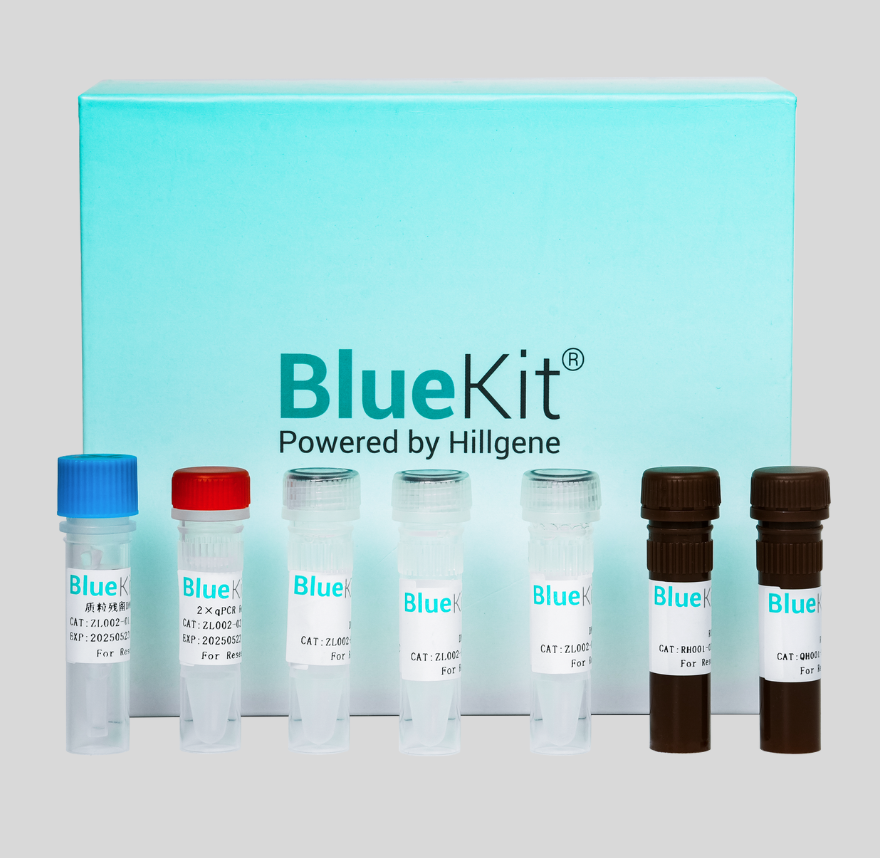
Ultra-Sensitive Detection : Detects residual K562 feeder cells at levels as low as 0.05% (10 copies/μL), ensuring compliance with FDA guidelines for cell therapy safety.
RT-PCR-Based Specificity : Utilizes optimized primers/probes targeting K562-specific sequences via RT-PCR, validated for specificity, accuracy, and precision per regulatory requirements.
Wide Dynamic Range : Linear detection range of 10–1×10<sup>6</sup> copies/μL, covering trace residuals to high-concentration samples without dilution.
Kit Components: Thaw all reagents (except primers/probes) at 4°C, then vortex and briefly centrifuge (6000 rpm, 5 sec).
Safety: Wear PPE (lab coat, gloves, mask) and work in a clean area to avoid contamination.
Equipment Setup:
Ensure qPCR instrument (e.g., ABI 7500, Bio-Rad CFX96) is calibrated with FAM/VIC channels.
Prepare RNA extraction and reverse transcription reagents.
RNA Extraction:
Isolate total RNA from 1×10<sup>6</sup>–5×10<sup>6</sup> cells using a commercial RNA extraction kit.
Reverse Transcription:
Convert RNA to cDNA using gDNA removal and RT reagents (not included in kit).
Standard Curve Dilution:
Serially dilute the K562 Quantitative Standard (1×10<sup>8</sup> copies/μL) with DNA Diluent to generate 6 points (10–1×10<sup>6</sup> copies/μL).
Example:
STD | Dilution Ratio | Final Concentration |
STD1 | 10μL STD0 + 90μL Diluent | 1×10<sup>6</sup> copies/μL |
... | ... | ... |
STD6 | 10μL STD5 + 90μL Diluent | 10 copies/μL |
Master Mix Assembly (per reaction):
Component | Volume (μL) |
2× qPCR Buffer | 10 |
Primer/Probe Mix | 4.6 |
50× ROX* | 0.4 |
*Omit ROX if instrument does not require it (e.g., Roche LightCycler).
Plate Setup:
Load 15μL Master Mix + 5μL sample/standard per well (triplicates for standards/samples). Include NTC (DNA Diluent).
| Milestones | Specifications | Deliverables |
| Kit Design & Optimization | • Target-specific primer/probe design for K562 feeder cell detection via RT-PCR. | • Optimized primer/probe sequences. |
| • Validation for specificity, accuracy, and precision per FDA/CDE guidelines. | • Validation report (LOD: 0.05%, linearity: 10–1×10<sup>6</sup> copies/μL). | |
| Ready-to-Use Components | • Pre-diluted quantitative standards (1×10<sup>8</sup> copies/μL). | • 100-test kit with standardized reagents (-18°C stable for 18 months). |
| • Pre-mixed 2× qPCR buffer and ROX reference dyes. | • Reduced hands-on time (no dilution steps). | |
| Rapid Workflow | • Total assay time: 2.5 hours (RNA extraction to results). | • Streamlined protocol with step-by-step guidance. |
| • Compatible with major qPCR platforms (ABI 7500, Bio-Rad CFX96, Roche LightCycler). | • Broad instrument flexibility (ROX High/Low options). | |
| Ultra-Sensitive Detection | • Detection limit: 10 copies/μL (0.05% residual K562 cells). | • Reliable trace-level analysis for cell therapy QC. |
| • Dynamic range: 10–1×10<sup>6</sup> copies/μL. | • FDA-aligned sensitivity for feeder cell safety. | |
| QC & Performance | • CV% ≤ 5% (replicates), R² ≥ 0.990, 85–110% amplification efficiency. | • SDS-PAGE/Western Blot validation data (optional). |
| • Includes NTC and extraction recovery controls. | • Excel-based data analysis template. | |
| Regulatory Support | • Compliant with FDA guidelines for residual feeder cell detection in cell/gene therapies. | • Documentation for regulatory submissions. |
| • CDE-approved validation parameters. | • Research-use-only disclaimer. |
Purpose: Ensure sensitive and accurate detection of residual K562 feeder cells in cellular therapy products.
Features:
Utilizes RT-PCR with optimized primers/probes targeting K562-specific sequences.
Detection range: 10–1×10<sup>6</sup> copies/μL, with a 0.05% sensitivity limit (FDA-compliant).
Includes pre-diluted standards and qPCR master mix for streamlined workflow.
Applications:
Quality control for NK cell expansion and other K562-based co-culture systems.
Validated for specificity, precision (CV% ≤ 5%), and linearity (R² ≥ 0.990).
Purpose: Minimize hands-on time while maintaining high reproducibility.
Features:
Ready-to-use reagents: Eliminate dilution steps (e.g., pre-mixed 2× qPCR buffer, ROX dyes).
Total assay time: 2.5 hours (RNA extraction to results).
Compatible with major qPCR instruments (e.g., ABI 7500, Bio-Rad CFX96, Roche LightCycler).
Technical Support:
Includes Excel-based data analysis template for automated residual % calculation.
Step-by-step protocol with NTC and extraction controls to ensure reliability.
Purpose: Support compliance with FDA/CDE guidelines for cell therapy safety.
Features:
Pre-validated parameters: Amplification efficiency (85–110%), recovery (~100%), and LOD verification.
Documentation: Detailed reports for regulatory submissions (e.g., specificity, precision data).
Stability: Reagents stable at -18°C for 18 months (freeze-thaw tested).
Applications:
Critical for GMP-compliant manufacturing of cell/gene therapies.
Research-use-only disclaimer aligned with ethical standards.
Background:
A biotech company developing NK cell therapies used irradiated K562 feeder cells to enhance expansion efficiency (10,000-fold increase). FDA guidelines required rigorous residual detection.
Challenge:
Needed sensitivity ≤0.05% to meet safety thresholds.
Existing methods (flow cytometry) lacked precision for trace-level detection.
Solution:
Deployed the K562 RT-PCR Detection Kit with:
Pre-optimized primers/probes for K562-specific targets.
10–1×10<sup>6</sup> copies/μL dynamic range.
Validated per FDA/CDE guidelines (CV% ≤5%, R² ≥0.990).
Result:
Detected 0.03% residual K562 cells (below FDA-recommended threshold).
2.5-hour workflow accelerated batch release vs. 8 hours with ddPCR.
Approved for Phase II trials with full regulatory documentation.
Background:
A CAR-T manufacturer used K562 feeders for T-cell activation but faced challenges quantifying residuals in final products.
Challenge:
Required GMP-compliant, high-throughput testing.
Cross-reactivity with patient-derived cells skewed earlier results.
Solution:
Implemented the kit’s FAM/VIC duplex assay (K562 vs. ABL control).
Ready-to-use standards eliminated dilution errors.
Integrated with Bio-Rad CFX384 for 96-well scalability.
Result:
Achieved 99% specificity (no false positives in patient samples).
Recovery rate ~100% across spiked samples.
Reduced QC costs by 40% vs. outsourced testing.
Background:
An academic lab studied NK cell-mediated clearance of irradiated K562 cells but lacked sensitive tools to track residuals over time.
Challenge:
Needed quantitative data at multiple time points (0–72 hours).
Traditional microscopy was low-throughput and subjective.
Solution:
Used the kit’s RT-PCR workflow to measure K562 DNA degradation:
RNA-to-cDNA conversion optimized for degraded samples.
Excel template automated % residual calculations.
Result:
Identified complete clearance by 48 hours (0.01% detection limit).
Published data in Cell Therapy Journal with kit methodology cited.


 86 198 5711 6962
  info@hillgene.com
 English